




Your solar panels work every day, but dust, pollen, and bird droppings work against them just as consistently. Studies show that dirty panels lose up to 25% of their energy production capacity when left uncleaned. Solar energy became the fastest-growing source of electricity in the world in 2023, with global capacity crossing 1.5 terawatts.
Protecting that investment starts with knowing how often you should clean your solar panels. The answer is not one-size-fits-all. Your location, climate, panel angle, and system type all shape the right schedule. This guide gives you a clear, practical answer based on your actual situation so your system keeps delivering the output you paid for.
Why Solar Panel Cleaning Matters
Solar panels generate electricity by absorbing sunlight. Anything that sits on the glass surface blocks that absorption.
Dust and dirt reduce output gradually. Bird droppings block light completely in one concentrated spot. Pollen creates a film that stays even after rain passes over it.
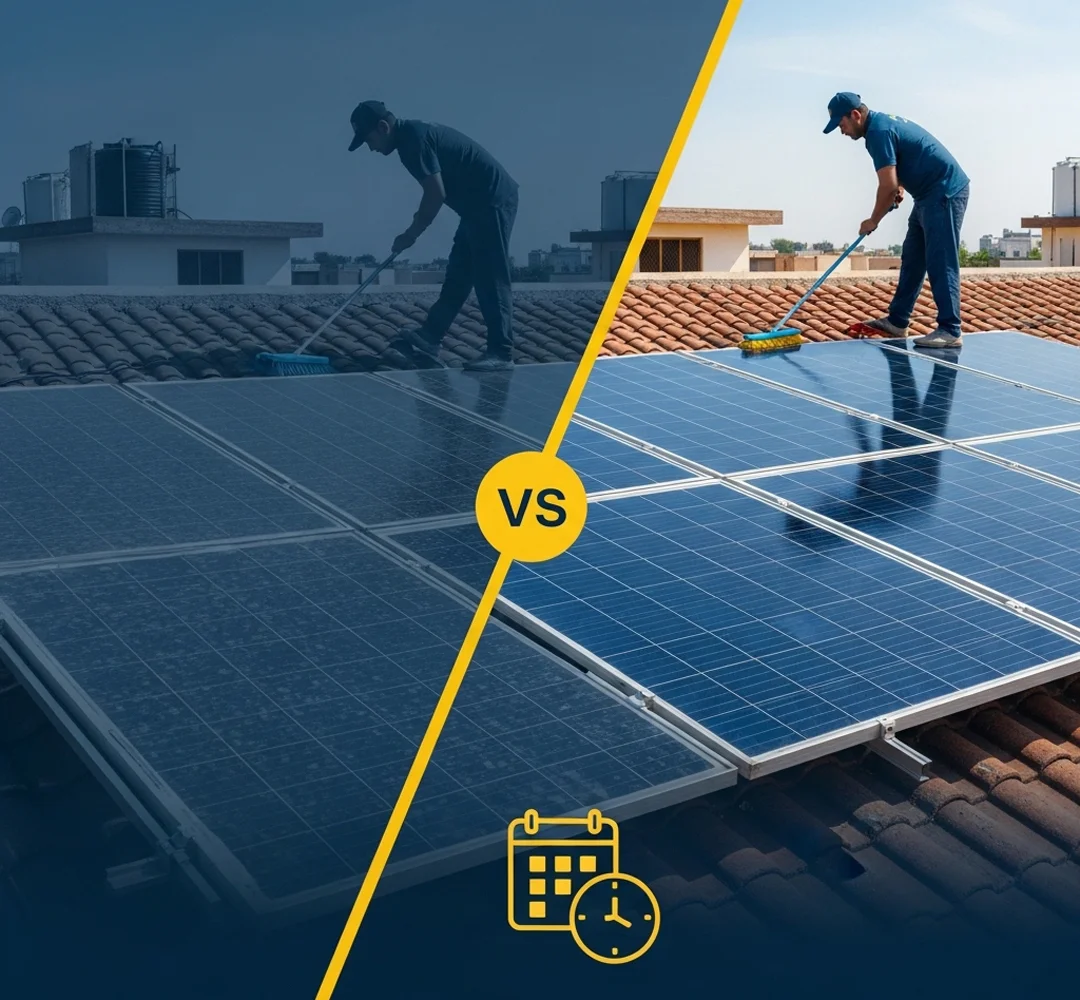
Research published in the Journal of Solar Energy Engineering found that panels cleaned regularly produce up to 12% more energy than those cleaned only by rainfall. Over a year, that gap compounds into real money.
Regular cleaning also gives you a chance to spot cracks, discoloration, or wiring issues early before they become expensive repairs.
How Often Should You Clean Your Solar Panels?
The general recommendation is to clean solar panels at least twice a year. Most solar professionals suggest cleaning once in spring and once in autumn to address seasonal debris buildup.
However, knowing precisely how often you should clean your solar panels depends on several factors beyond a simple calendar schedule.
Panels in dry, dusty climates need cleaning every two to three months. Panels in high-rainfall areas may only need a single professional clean per year. The right answer for your system sits somewhere in that range based on your specific conditions.
A good working rule: if your panels look visibly dirty or your monitoring system shows a drop in output that weather alone does not explain, it is time to clean.
How Location Affects Your Cleaning Schedule
Where you live is the single biggest factor in determining how often you need to clean your panels.
Coastal Areas
Salt air deposits a thin, sticky film on panel surfaces. This film does not wash off easily with rain. Coastal homeowners should plan to clean every three to four months to prevent salt buildup from causing long-term surface damage.
Desert and Dry Climates
Sand and dust accumulate fast in desert regions. A single dust storm can cut output by 30% or more within hours. Cleaning every two to three months is the minimum in these environments, and some owners in very dusty areas clean monthly.
Urban and Industrial Zones
Pollution particles, vehicle exhaust, and industrial residue settle on panels in cities and industrial areas. These particles bond to the glass surface and resist light rain. Cleaning every three to four months maintains output in these locations.
Wooded and Rural Areas
Pollen, tree sap, leaves, and bird activity are the main challenges in wooded settings. Two cleanings per year generally suffice, but panels near heavily populated bird roosts or large trees may need attention more often.
High-Rainfall Regions
Frequent rain removes loose dirt and keeps panels reasonably clean. One thorough professional clean per year is usually enough, though a visual check after long dry spells is always worth doing.
How Seasonal Changes Affect Solar Panel Cleaning
Seasons change what lands on your panels. Understanding these patterns helps you plan a cleaning schedule that works with the year rather than reacting to it.
Spring
Pollen season creates a yellow or green film on panel surfaces. This film is fine enough to pass through rain without being removed. A targeted spring clean clears pollen buildup and prepares panels for the high-output summer months ahead.
Summer
Long dry spells allow dust and particulates to accumulate without rain to clear them. Bird activity also increases. Check your monitoring data mid-summer and schedule a clean if output drops below seasonal norms.
Autumn
Falling leaves, seed pods, and organic debris gather on panel surfaces and create shading. An autumn clean before winter removes this material and ensures panels enter the lower-light months as efficiently as possible.
Winter
Snow typically slides off angled panels on its own. Do not use abrasive tools to remove it. If heavy snowfall persists for several days, a soft snow rake designed specifically for solar panels can clear the surface safely without scratching the glass.
Cleaning Frequency by Location: Quick Reference Table
Use this table to find the recommended cleaning schedule for your specific environment:
|
Location Type |
Cleaning Frequency | Main Culprit | Extra Action Needed |
|
Coastal areas |
Every 3 to 4 months |
Salt deposits | Rinse with deionized water |
|
Desert or dry climate |
Every 2 to 3 months | Dust and sand | Soft brush before rinsing |
|
Urban or industrial |
Every 3 to 4 months | Pollution residue |
Mild detergent solution |
| Wooded or rural areas | Twice a year | Leaves, pollen, bird droppings |
Check for shading from trees |
| High-rainfall regions | Once a year, minimum | Algae, streaks |
Inspect after long dry spells |
| Balcony systems | Every 6 to 8 weeks | Urban dust, car exhaust |
Wipe panels with a damp cloth |
Signs Your Solar Panels Need Cleaning Now
Your monitoring system and your eyes both give useful signals. Watch for these signs:
- Your energy output drops noticeably without a change in weather or daylight hours
- Panels appear visibly dirty, streaked, or discolored from ground level
- Bird droppings cover a significant portion of any panel
- A long dry spell follows a period of high pollen, dust, or pollution activity
- Your electricity bill rises without a corresponding change in consumption
Any one of these signs means your panels need attention. Do not wait for the next scheduled clean if you notice a drop in output.
When Your System Needs a Full Energy Audit
Cleaning resolves surface-level output loss. But sometimes performance issues run deeper. Scheduling a professional energy audit gives you a complete picture of how your system performs across every component, not just the panels.
An energy audit measures actual output against expected output, identifies inefficiencies in your inverter or wiring, and checks whether your system design still matches your household energy needs.
Most solar owners benefit from an audit every two to three years, or immediately after any significant output drop that cleaning alone does not resolve.
What a Professional System Inspection Covers
A professional system inspection goes well beyond cleaning the panel surface. It examines the electrical connections, mounting hardware, inverter performance, and any physical damage to the panels themselves.
Inspectors check for micro-cracks, delamination, and hotspots that reduce output without being visible to the naked eye. They also verify that your mounting brackets remain secure after weather exposure.
Book a system inspection every one to two years, regardless of whether your panels look clean. Structural and electrical issues do not always show up as visible dirt.
How a Solar Maintenance Service Keeps Your Output High
A scheduled solar maintenance service combines cleaning, inspection, and performance monitoring into a single visit. It removes the guesswork from your maintenance schedule.
Professional technicians use deionized water and non-abrasive tools that clean without scratching the anti-reflective coating on your panels. This coating degrades over time with harsh chemicals or abrasive brushes, permanently reducing panel efficiency.
A maintenance service also logs your output data before and after cleaning so you can see the direct performance benefit of each visit.
What to Know About Cleaning Your Balcony System
Owners of a balcony system face a different set of cleaning challenges compared to roof-mounted panels. Balcony panels sit closer to street level and collect urban dust, exhaust particles, and general city grime at a faster rate.
The good news is that balcony panels are far easier to access. You can wipe them down with a damp, soft cloth every six to eight weeks without specialist equipment.
Avoid cleaning balcony panels with a high-pressure hose. The pressure can force water into the panel frame or damage edge seals. A soft sponge with clean water and a small amount of mild detergent is enough for regular maintenance.
DIY vs Professional Cleaning: What to Consider
Cleaning your own panels is practical if they sit at a safe, accessible angle and your roof is easy to work on.
When DIY Works
Ground-mounted panels and balcony systems are straightforward to clean yourself. Use lukewarm water, a soft brush or sponge, and a squeegee to avoid streaks. Clean in the early morning or late afternoon when panels are cool to prevent rapid evaporation.
When to Call a Professional
Steep or high roof-mounted panels require professional equipment and safety training. Any time you would need a ladder on a sloped surface, the safety risk outweighs the cost of a professional cleaning.
Professionals also carry the right insurance. If something goes wrong during a DIY clean, damage to your panels or roof may not fall under your home insurance policy.
What Never to Use
- Abrasive scrubbing pads or steel wool — they scratch the glass permanently
- Harsh chemical cleaners or solvents — they degrade the anti-reflective coating
- High-pressure washers — the force can damage seals and frame integrity
- Hot water on hot panels — the sudden temperature change can crack the glass
Final Thoughts
Knowing how often you should clean your solar panels is one of the most practical steps you can take to protect your solar investment. Clean panels produce more energy, last longer, and give you better returns on every kilowatt-hour generated.
Most owners need cleaning twice a year at a minimum. Coastal, dusty, or urban environments call for more frequent attention. Your monitoring data and a quick visual check tell you when the schedule needs adjusting. Solcare makes it simple. Visit Solcare to explore our cleaning, inspection, and maintenance plans designed to keep your system performing at its best year-round.
FAQs
How often should you clean your solar panels in a dry climate?
In a dry or desert climate, you should clean your panels every two to three months. Dust and sand accumulate faster in these regions and reduce output significantly if left uncleaned. Knowing how often you should clean your solar panels in your specific climate is the starting point for protecting your system’s long-term efficiency.
Does rain clean solar panels automatically?
Light rain removes loose debris but does not remove bird droppings, pollen film, salt residue, or pollution particles. Relying solely on rainfall leaves a layer of buildup that consistently reduces your output. A manual clean at least once a year remains necessary even in high-rainfall regions.
How often should you wash solar panels if you live near the ocean?
Coastal owners should wash solar panels every three to four months. Salt air leaves a film that bonds to the panel surface and accelerates corrosion on metal frame components if left in place. Understanding how often you should wash solar panels near the coast protects both output and long-term panel health.
Can I clean my solar panels myself?
Yes, if your panels are safely accessible. Use soft tools, clean water, and mild detergent. Never use abrasive materials, harsh chemicals, or high-pressure water. If your panels sit on a steep or high roof, hire a professional to avoid injury and accidental panel damage.
How do I know if my panels are dirty enough to clean?
Check your monitoring system for output drops that the weather does not explain. Look at your panels from ground level for visible dust, streaks, or bird droppings. If either signal appears, it is time to clean. Following a scheduled approach to how often you should clean solar panels based on your location prevents output loss before it builds up.

