


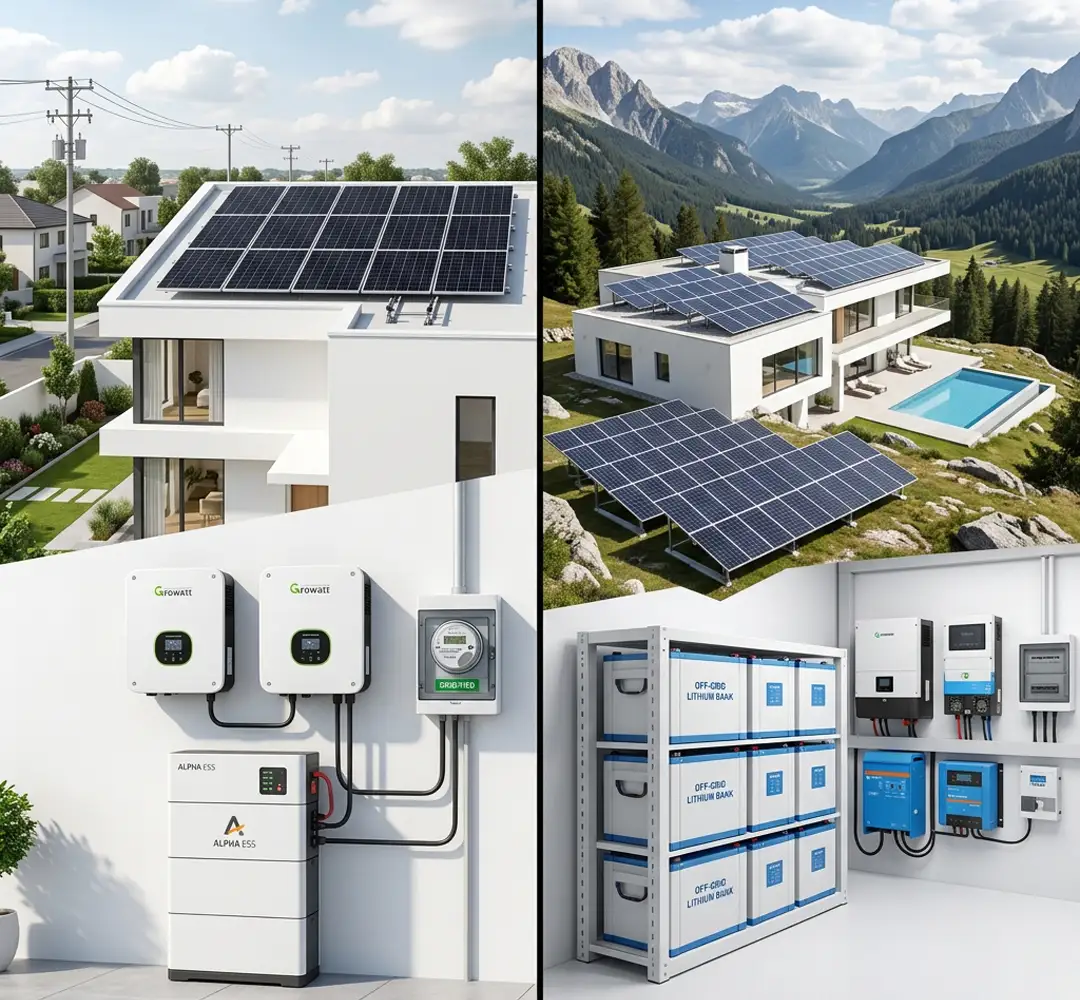
Imagine having the ability to manage your power shortages through the use of a solar system while cutting costs from your energy bills. The ideal solar system enables you to do just that, and deciding between a hybrid solar system and an off-grid solar system is arguably one of the most crucial decisions that a Pakistani property or commercial business owner has to make by 2026. It is estimated that there is currently 51GW of solar installation in Pakistan, and it is considered one of the quickest growing solar markets worldwide. Nonetheless, many customers fail to select the appropriate solar system, ending up losing out in cost savings. This article explores the two types of solar systems comprehensively to enable you to make the best decision for yourself.
Why This Decision Matters in Pakistan Right Now
The power crisis in Pakistan by 2026 continues to be quite dire. Areas like Burns Road in Karachi report up to 10 hours of scheduled daily load shedding, and there are additional unplanned power cuts ranging between three and four hours for LESCO customers in Lahore. In rural regions of Sindh and Balochistan, power interruptions have risen to eight to twelve hours per day.
However, the move by the government from Net Metering to the newly launched Prosumer Regulations 2026 has transformed the economics of purchasing solar power. The export price under the new regulations is approximately PKR 8 to 11 per unit, while the import price is PKR 42 to 48 per unit. The massive disparity has shifted the economics of solar installations to favor self-consumption and storage over grid feeding.
This implies that whatever decision you make now on which solar installation system to purchase will determine your electricity expenses and convenience for the next 20 to 25 years.
What Is a Hybrid Solar System?
The hybrid solar energy system links your solar PV panels to both the national electricity grid and batteries. The hybrid solar energy system produces power during the daytime and distributes the output, which can be used immediately, stored in batteries in excess, or sold back to the grid in units that are left unused.
In the event of a blackout or a power outage, the hybrid inverter will automatically switch to both battery power and solar energy. This ensures that you get an uninterrupted power supply during the night or rainy days.
Key advantages of a hybrid solar system:
- Uninterrupted power during load shedding
- Net billing credits reduce monthly electricity bills
- Battery stores daytime solar energy for evening use
- Works in cities and semi-urban areas with grid access
- Compatible with NEPRA’s Prosumer Regulations 2026
- Scalable as batteries can be added as the need grows
A 5kW hybrid solar system with battery backup in Pakistan currently costs between PKR 600,000 and PKR 800,000, depending on panel brand, inverter model, and battery type. For more on what a professional hybrid installation includes, visit Solcare’s Solar Installation Service.
What Is an Off-Grid Solar System?
An off-grid solar power system runs entirely independent of WAPDA or other electricity distribution firms. It depends solely on solar panels and battery storage to provide you with electricity for your home. There will be no connection to the grid, and there won’t be any electricity bills or net metering.
Due to the need to fulfill all your electricity requirements through solar energy alone, the battery storage required for off-grid systems will be substantially larger than that of hybrid systems. This will make them costlier and more difficult to manage.
Key characteristics of off-grid solar:
- No grid connection required or used
- Entirely dependent on batteries and solar panels
- Higher upfront cost due to large battery requirements
- No electricity bills at all
- Necessary for areas where the grid does not reach
- Cannot take advantage of net billing
Off-grid systems are the right choice for villages and remote properties in areas like interior Sindh, Balochistan, or northern mountain regions where WAPDA supply is either unavailable or completely unreliable.
Hybrid vs Off-Grid: Side-by-Side Comparison
Feature | Hybrid Solar System | Off-Grid Solar System |
Grid Connection | Yes | No |
Battery Required | Yes (smaller bank) | Yes (larger bank) |
Load Shedding Backup | Yes | Yes |
Net Billing / Credits | Yes | No |
Upfront Cost (5kW) | PKR 600,000 to 800,000 | PKR 900,000 to 1,200,000+ |
Payback Period | 3 to 4 years | 4 to 6 years |
Best For | Urban and semi-urban | Rural and remote areas |
WAPDA Connection Needed | Yes | No |
Expandable | Yes | Yes, but costlier |
When Should You Choose a Hybrid Solar System?
A hybrid solar system is the right choice for the vast majority of Pakistani households and businesses. Here is when it makes the most sense.
You live in a city or town with grid access. Even with load shedding, having a grid connection gives you a financial safety net through net billing and ensures your batteries are backed up during extended cloudy periods.
You experience frequent load shedding. The hybrid system’s battery backup kicks in the moment the grid goes down, so your air conditioning, refrigerator, and office equipment keep running without any interruption.
You want to maximize savings under the new 2026 regulations. The Prosumer Regulations 2026 reward self-consumption. A hybrid system stores your daytime solar energy and uses it in the evening instead of sending it to the grid at a low export rate. This keeps your grid dependency and your monthly bill as low as possible.
You run a business. For commercial and industrial users in Karachi, Lahore, Faisalabad, or Islamabad, a hybrid system ensures operational continuity during outages and reduces energy costs simultaneously.
If you already have an on-grid system, the good news is that upgrading is straightforward. Solcare specializes in On-Grid to Hybrid System Conversions, helping existing solar owners add battery backup without replacing their entire setup.
When Does Off-Grid Make Sense?
Off-grid solar is not the wrong choice; it is simply the right choice for a specific set of situations. Consider off-grid if any of the following apply to you.
No grid supply available. Hundreds of villages in Balochistan, interior Sindh, and parts of KPK have little to no WAPDA connectivity. For these communities, off-grid solar is not a preference but a necessity. The Alternative Energy Development Board (AEDB) has already used off-grid solar to electrify hundreds of such villages across Pakistan.
Extremely unreliable grid. If your area experiences 12 or more hours of daily outages and the grid voltage fluctuates dangerously, cutting the connection entirely and going off-grid may be more reliable than staying connected.
Agricultural or remote industrial use. Farms, fish farms, and remote processing units that operate far from the grid often find off-grid solar more practical than extending grid infrastructure to their location.
That said, for anyone with a reliable grid connection, even a partial one, a hybrid system will deliver better value, lower total cost, and more flexibility over time.
Why Solcare Recommends Hybrid for Most Pakistanis
Having served many residential, commercial, and industrial customers throughout Pakistan, Solcare always suggests the hybrid solar power system as the ideal choice for most Pakistani electricity consumers. Here’s why.
As per the latest Prosumer Regulations of 2026, the economic benefit lies with the one who consumes his solar energy himself and does not export it. The hybrid solar system, along with an appropriately sized battery, enables you to do just that. It allows you to produce energy through solar panels during daytime hours, store the surplus energy, and utilize it from the battery at night when electricity rates are the highest.
The Solcare engineering team evaluates your average monthly electricity usage, your load-shedding schedule, and your rooftop area to suggest a perfectly sized hybrid solar system. This prevents any miscalculation of the battery size and saves you from over-investing in unnecessary capacity.
Beyond installation, Solcare offers Solar Maintenance and Solar Energy Audit Services that guarantee optimal performance from your hybrid energy systems over time. Neglecting to perform professional maintenance on a hybrid energy system can result in a loss of power generation in just the same way as any other system.
If you want to understand how effectively your existing energy system is working and whether upgrading it to a hybrid system is worth it, Solar System Inspection Service, offered by Solcare, is something that should come first.
For more information about the types of solar services Solcare offers, feel free to visit Solcare.
How to Get Started with Solcare
The initial steps involved are quite simple. You can visit the official website solcare.pk and contact their customer support team for a free consultation. Solcare caters to residential, commercial, and industrial consumers based in Karachi, Lahore, Islamabad, and all other cities of Pakistan. Their team of professionals will conduct an analysis of your energy requirements and help you install a system.
With more than a thousand installations under their belt and a solar efficiency rate of 98%, they have the technical knowledge and after-sales service required for your investment.
FAQs
Q1. What is the main difference between a hybrid solar system and an off-grid system?
The hybrid solar system is linked with the electricity grid and battery bank to enjoy the benefits of net metering billing, along with backup power in case of load shedding. The off-grid solar system doesn’t have any link with the electricity grid and uses only batteries and solar panels. For residential and commercial customers in Pakistan, the hybrid solar system is more advantageous and economical.
Q2. Is a hybrid solar system worth it in Pakistan in 2026?
Yes. Since the introduction of Prosumer Regulations 2026, the hybrid solar system is quite beneficial for users as it provides them with storage facilities that allow storing of daytime solar electricity to be utilized in the evening, when they don’t have to rely on expensive electricity from the grid.
Q3. How much does a hybrid solar system cost in Pakistan?
For example, a 5kW hybrid solar system with battery backup usually costs around PKR 600,000 to PKR 800,000. Systems with larger sizes or lithium/LiFePO4 battery packs may require more. Kindly contact Solcare for a personalized quote according to consumption requirements.
Q4. Can I convert my existing on-grid system to a hybrid solar system?
Yes. Solcare is known for its services in converting the grid connection into a hybrid one. This improvement will help you get a battery connection without installing the system again.
Q5. Which areas of Pakistan are best suited for off-grid solar?
Off-grid solar energy would be best suited for the rural and far-flung regions of Baluchistan, interiors of Sindh, some parts of KPK, and the northern regions where the WAPDA service does not exist. In urban and semi-urban areas, it’s better to opt for hybrid solar energy.