






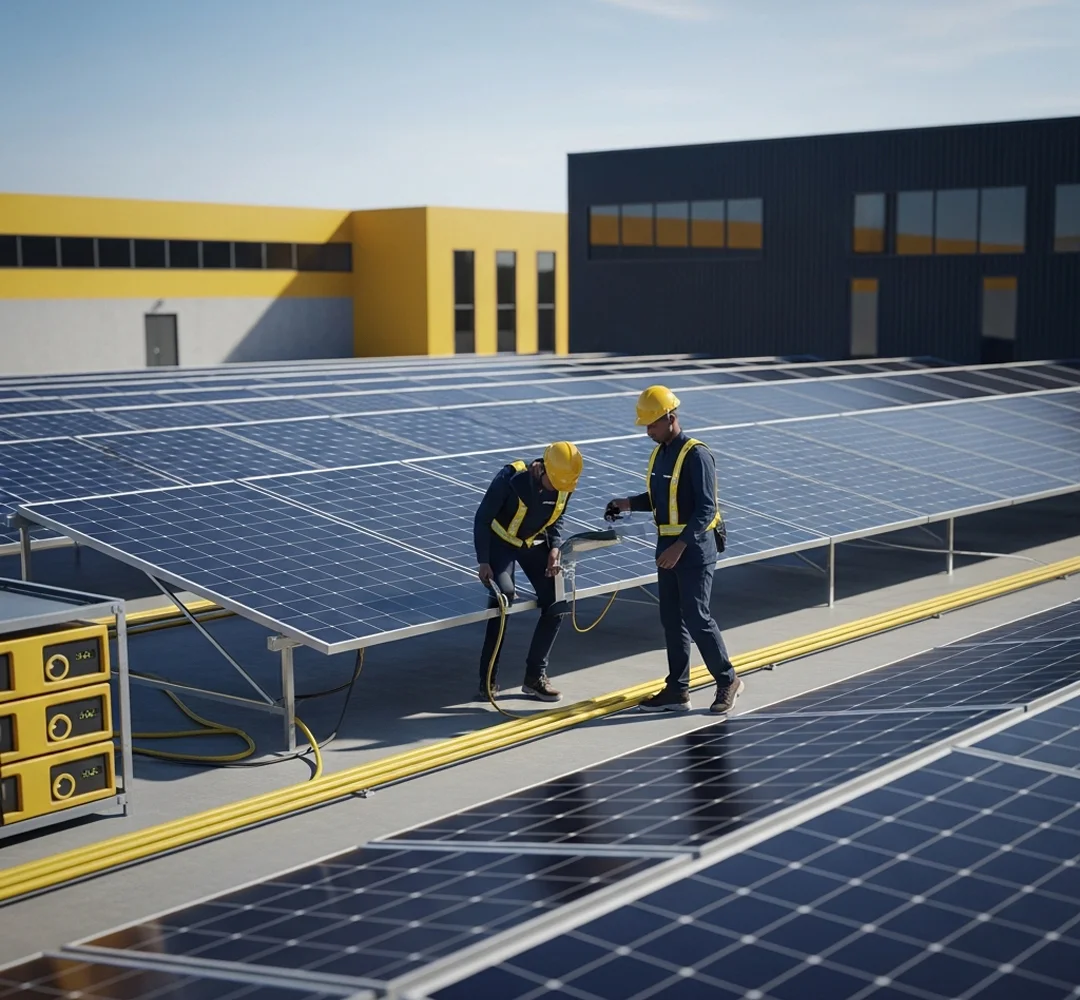
Pakistan’s industrial sector has been squeezed from both sides for years. Electricity tariffs that climb every quarter. Load shedding disrupts production schedules and damages machinery. Diesel generator costs that eat into margins already under pressure from global competition. Commercial and industrial users are major beneficiaries of solar energy, installing solar systems to shield themselves from power outages. Lower electricity costs make industries more competitive internationally, especially for export-oriented ones.
Industrial solar installation is no longer a niche decision for environmentally conscious businesses. It is a financial strategy that thousands of Pakistani factories, warehouses, and industrial facilities are adopting to stabilize their energy costs and protect their competitiveness for the next 25 years. This guide covers everything Pakistani business owners need to know before committing to an industrial solar installation in Karachi or anywhere else in the country.
What Is Industrial Solar Installation?
Industrial solar systems are large systems that generate a significant amount of electricity. Because of this, they are well-suited for factories, warehouses, and large corporations. Industrial solar installation involves the design, engineering, and commissioning of large-scale solar power systems for factories, manufacturing plants, warehouses, cold storage facilities, logistics hubs, and industrial campuses.
Industrial solar panel installation is designed for factories with heavy machinery and three-phase loads. The systems require a detailed load profile, power factor correction, and high-capacity inverters. Roof strength, shading, and production schedules are also critical factors. Most factories use solar to stabilize energy costs and avoid sudden tariff hikes. Solar helps reduce reliance on diesel generators during outages.
Unlike residential or small commercial installations, industrial solar systems are engineered projects. They require professional load analysis, structural assessment, three-phase inverter selection, and careful integration with existing electrical infrastructure. The industrial sector contributes significantly to climate change because of greenhouse gas emissions. Therefore, the industrial sector needs to consider its impact on the environment and take the necessary steps to reduce emissions.
How Industrial Solar Systems Work
An industrial solar system follows the same principle as any other solar installation, but at a much larger scale and complexity that demands specialist expertise.
Solar panels are mounted on factory rooftops or ground-mounted structures that generate DC electricity throughout the day. Industrial inverters with high capacity convert this DC energy into three-phase AC electricity. The system supplies this AC power to the factory’s main distribution board, powering heavy machinery, HVAC systems, compressors, and production equipment in real time.
Any excess electricity that is generated from these systems can be credited through the net metering process.
For facilities that need uninterrupted power during load shedding or grid outages, a hybrid solar system with a battery energy storage system (BESS) provides uninterrupted solar energy when the grid goes down, eliminating the need for diesel generators in most situations.
Key Components of an Industrial Solar System
High-Wattage Solar Panels
Industrial installations use the highest wattage panels available to maximize output per square meter of roof space. For bigger rooftops and industrial sites, Trina Vertex and Canadian Solar HiKu are proven workhorses. For factories and warehouses, Canadian Solar or Trina bifacial modules deliver superior output. Bifacial panels generate electricity from both front and rear surfaces, making them particularly effective on large reflective industrial rooftops.
Three-Phase String or Central Inverters
Industrial facilities run on three-phase power. Standard residential inverters are not compatible. Industrial installations require high-capacity three-phase string inverters or central inverters engineered for the load profiles and voltage requirements of manufacturing environments.
Mounting Structures
Industrial rooftops in Pakistan are typically flat concrete, steel sheeting, or asbestos. Each surface requires a different mounting approach. Structural load calculations are essential before any mounting system is designed. Getting this wrong risks both system damage and structural risk to the building.
Main Distribution Board Integration
The solar system must be properly integrated into the factory’s existing electrical infrastructure. This includes protection equipment, surge arrestors, DC and AC isolators, and metering arrangements for net metering applications.
Monitoring System
Real-time monitoring platforms track generation, consumption, export, and system health. For industrial users, this data is essential for understanding energy flows, identifying underperformance, and reporting to management on energy savings.
Industrial vs Commercial Solar: What Is the Difference?
| Feature | Industrial Solar | Commercial Solar |
| System Size | 100 kW to several MW | 10 kW to 100 kW |
| Load Type | Three-phase heavy machinery | Single and three-phase office loads |
| Complexity | High, requires detailed engineering | Moderate |
| Panel Type | High-wattage bifacial modules | Standard monocrystalline |
| Inverter Type | Central or three-phase string | Standard hybrid or string |
| Roof Assessment | Structural load analysis required | Basic assessment sufficient |
| Approval Process | NEPRA, AEDB, and DISCO approval | DISCO and AEDB approval |
| Payback Period | 2 to 4 years | 3 to 5 years |
Industrial Solar Installation in Karachi: What to Know
Karachi presents both the strongest case and some unique considerations for industrial solar installation in Karachi specifically.
The city has exceptional solar irradiance, averaging more than 5.5 kWh per square meter per day year-round. Karachi’s industrial zones in SITE, Korangi, Landhi, and Port Qasim house thousands of factories across textiles, food processing, steel fabrication, chemicals, and logistics, all operating under some of the highest industrial electricity tariff rates in Pakistan.
KE (K-Electric) governs the grid in Karachi rather than WAPDA, which creates specific requirements for net metering applications, grid interconnection approval, and billing arrangements. Net metering applications in Karachi go through KE’s own approval process, which has different documentation requirements and timelines than WAPDA-served areas.
Industrial solar panel installation in Karachi is no longer an option for businesses across the city and beyond. It is a smart way to cut costs, reduce dependence on the grid, and protect against rising electricity tariffs. From factories and warehouses to offices and commercial buildings, proper planning, quality equipment, and professional installation are key to maximizing savings and ROI.
For industrial solar installation in Karachi, working with an installer who has direct experience navigating KE’s interconnection requirements and net metering approval process saves significant time and avoids costly delays.
Choosing the Right System Type for Your Business
On-Grid Industrial System: Connects directly to the KE or WAPDA grid. No battery storage. Lowest upfront cost. Best for factories with a consistent grid supply and high daytime consumption. Net metering credits offset nighttime grid consumption. Cannot operate during grid outages.
Hybrid Industrial System: Combines solar generation with battery storage. Powers the factory during load shedding without diesel generators. Higher upfront cost but delivers full energy independence during outages. Best for facilities where production downtime carries a high financial cost. A properly designed hybrid solar system balances battery capacity against production requirements to maximize both uptime and financial return.
Off-Grid Industrial System: Completely independent of the grid. Requires substantial battery bank capacity. Best suited for industrial facilities in areas with no reliable grid connection, such as remote processing plants or rural manufacturing operations.
For most urban and semi-urban Pakistani factories, a hybrid system delivers the optimal combination of cost savings, production continuity, and return on investment.
Cost and ROI of Industrial Solar Installation in Pakistan
Industrial solar costs in Pakistan depend on system size, panel brand, inverter specification, structural requirements, and whether battery storage is included.
General Cost Reference for Industrial Systems in Pakistan (2026)
| System Size | Estimated Cost (PKR) | Estimated Monthly Savings |
| 100 kW | 8,000,000 to 12,000,000 | 400,000 to 600,000 |
| 250 kW | 18,000,000 to 25,000,000 | 900,000 to 1,300,000 |
| 500 kW | 35,000,000 to 48,000,000 | 1,700,000 to 2,500,000 |
| 1 MW+ | 65,000,000 and above | 3,000,000 and above |
Payback periods for well-designed industrial systems in Pakistan typically fall between 2 and 4 years, after which the facility generates electricity at near-zero cost for the remaining 20 or more years of panel life.
Typically, industrial facilities require three-phase solar systems sized between 100 kW and several megawatts. Factors such as production shifts, machine running hours, and roof space also affect sizing. Accurate load analysis and energy audits are essential to prevent under or oversizing. A properly sized system ensures maximum savings, reduces reliance on diesel generators, and avoids unnecessary upfront costs.
Industrial Solar System Sizing Guide
Sizing an industrial solar system incorrectly is one of the most expensive mistakes a factory can make. Undersizing means you leave significant savings on the table. Oversizing means you spend more than necessary upfront, with diminishing returns.
Step 1: Compile Your Energy Data
Gather 12 months of electricity bills. Note your peak demand, average monthly consumption in kWh, and the times of day when consumption is highest.
Step 2: Conduct a Load Profile Analysis
Map out which machinery, equipment, and systems run at what times during the production day. Industrial solar performs best when generation aligns with the heaviest consumption periods.
Step 3: Assess Your Roof
Measure available roof space and assess its structural capacity. Steel sheet roofs, concrete slabs, and asbestos sheeting all have different load ratings and require different mounting approaches.
Step 4: Account for Production Shifts
Factories running single daytime shifts extract maximum value from solar because generation and consumption align almost perfectly. Double-shift operations require either more storage capacity or a strategy for managing nighttime consumption through net metering credits.
Step 5: Get a Professional Energy Audit
A qualified installer conducts a full site assessment and provides a system recommendation based on your actual load profile. This is not a step to skip or rush.
Maintenance: Protecting Your Investment
An industrial solar installation represents a multi-million rupee investment. Proper maintenance is what ensures that the investment continues performing at rated capacity across its full 25-year lifespan.
Panel Cleaning
Karachi’s industrial zones accumulate dust, soot, and pollution residue on panel surfaces faster than almost any other environment in Pakistan. Dirty panels can lose 15 to 25 percent of their output in as little as a few weeks. Using a proper solar panel cleaning brush designed for large-scale installations makes the cleaning process efficient and safe without risking panel surface damage. Regular solar panel cleaning should be scheduled at a minimum of monthly for industrial facilities in Karachi’s environment.
System Inspection
Periodic system inspection goes beyond surface-level checks. It covers inverter performance data, string voltage measurements, thermal imaging to identify hotspots or faulty cells, wiring integrity, mounting structure security, and protection equipment function. For industrial systems, an annual comprehensive inspection is the minimum. Semi-annual inspections are recommended for systems operating in harsh industrial environments.
Solar Maintenance Service
A contracted solar maintenance service from a qualified provider gives industrial facilities scheduled preventive maintenance, priority response to faults, performance monitoring, and documentation for warranty claims. For a factory where energy reliability directly affects production output, a maintenance contract is not a cost; it is insurance on a multi-million rupee asset.
Conclusion
Industrial solar installation in Pakistan is one of the most financially compelling investments a factory or warehouse operator can make in 2026. With tariffs rising, load shedding persisting, and solar technology delivering proven 25-year performance, every month a business delays is a month of avoidable energy costs that compound over time.
At Solcare, we help Pakistani businesses design, install, and maintain industrial solar systems built for the specific demands of local industrial environments. From initial energy audit to commissioning and long-term maintenance, we are here to make sure your system delivers on its promise from day one to year twenty-five.
FAQs
Q1. What is an industrial solar system?
Industrial solar systems are large-scale systems, typically ranging from 100 kW to several megawatts, that are well-suited for factories, warehouses, and large corporations. Industrial solar installation and design is more complex than traditional residential and commercial systems, requiring a detailed load profile, power factor correction, and high-capacity inverters.
Q2. How much does an industrial solar installation cost in Pakistan?
Costs vary depending on the system size and specifications. A 100 kW industrial system usually costs between PKR 8,000,000 and PKR 12,000,000. Larger systems of 500 kW and above range from PKR 35,000,000 upward.
Q3. Is industrial solar installation in Karachi different from other cities?
Yes. Industrial solar installation in Karachi operates under K-Electric rather than WAPDA. It means different net metering approval processes, documentation, and grid interconnection standards.
Q4. What size solar system does a factory in Pakistan need?
Most industrial facilities require three-phase systems between 100 kW and several megawatts, depending on peak load, daily consumption, and production shift hours.
Q5. How often do industrial solar panels need cleaning in Karachi?
Solar panels in Karachi’s industrial zones should be cleaned at a minimum once a month due to heavy dust, soot, and pollution accumulation. In some high-pollution areas, panels need more frequent cleaning to maintain maximum output.

