



Most homeowners focus on keeping their panels free of dust. Not everyone thinks carefully about what they should use to clean them and how to clean without damaging their panels. One wrong cleaning product can scratch protective coatings, corrode aluminium frames, leave residue that blocks sunlight, and void your warranty. Solar panel cleaning requires a more gentle and smart approach than most people realize.
After spending a good amount on solar, the last thing you would want is to scrub the panels roughly with the wrong cleaner and lose efficiency. The good news is that you can clean solar panels without chemicals and still get spotless glass and the best performance. There are a few simple and easy methods many homeowners overlook. Purified water and a gentle cleaning do most of the work. This guide walks you through the safe way to clean your panels and when to call a professional.
Why Chemical-Free Cleaning Is Better
Your Investment Depends on It
Solar panels are a long-term investment. A standard residential system lasts 25 years or more. Every cleaning session either protects that lifespan or shortens it. Chemical-free solar panel cleaning ensures you are not introducing corrosive agents every time you clean.
Eco-friendly cleaning methods are gentle yet highly effective, making them ideal for both residential and commercial solar panels. Routine maintenance helps panels last longer and perform reliably for years. Proper cleaning methods also protect your warranty from being voided by unapproved cleaning practices.
Energy Output Is Directly Affected
Dirty panels produce less energy, leading to higher utility bills. Eco-friendly solar panel cleaning restores surface clarity without harsh chemicals, allowing panels to operate at full capacity and maximizing financial returns from your solar system.
Even a thin layer of dust can reduce output measurably. In Pakistan’s dusty climate, the impact of soiled panels is significant. Proper cleaning for solar panel surfaces is therefore not just about appearance. It directly affects how much electricity your system generates every single day.
What Happens When You Use Harsh Chemicals
Surface Damage
Avoid bleach or harsh chemicals at all costs. Heavy cleaning solutions, bleach, or ammonia are not recommended for cleaning solar panels. These agents can damage the solar cells and create other issues for your system. Some detergents leave behind residue that blocks sunlight or breaks down protective panel coatings over time.
The anti-reflective coating on solar panels is delicate. Once scratched or chemically degraded, it cannot be restored. Solar panel cleaning with the wrong products causes permanent efficiency loss.
Frame Corrosion
Bleach and ammonia-based products corrode aluminium frames. This weakens the mounting points and creates rust that spreads over time. Chemical runoff also harms roofing materials and landscaping around the installation.
Warranty Risks
Most solar panel manufacturers specify approved cleaning methods in their warranty terms. Using unapproved chemicals voids warranty coverage. A panel damaged by chemical cleaning is therefore entirely your financial responsibility to repair or replace.
A professional solar system inspection after any suspected chemical exposure helps identify damage early before it worsens. Catching coating degradation early makes repairs far more manageable.
Safe Cleaning Solutions for Solar Panels
Pure Water Is Best
Distilled water will clean the panels without leaving any streaks or mineral residues. It avoids the need to use soap or other products that may leave films on the panels. This is by far the safest and most efficient solution to clean solar panels in almost all environments.
In Pakistan, tap water has a high mineral content. It leaves a white deposit of calcium on the surface of the panels after evaporation. Filtering water before using it to clean solar panels solves this issue.
Natural Alternatives
Natural cleaners such as vinegar, lemon juice, or a mild baking soda paste can be used to clean away grime without needing to use chemicals. These options are inexpensive, safe, and won’t damage your roof or lawn when you rinse them off. Vinegar and water blends are powerful, eco-friendly cleaners used by professionals worldwide.
One part white vinegar to eight parts water is good enough to remove mineral deposits and grime.
Mild Biodegradable Soap
Biodegradable soap is advised for washing solar panels where plain water cannot achieve results. Do not use window cleaner, scrubbers, or ammonia solution. Dawn liquid soap is mild, effective, and biodegradable. Make sure to rinse the panels well enough to avoid any residue.
Add just a little soap to purified water in a bucket. Less is better. Too much soap leaves residue that collects dust and makes any cleaning of solar panels less effective.
Right Tools for Chemical-Free Cleaning
Soft Brushes and Cloths
Soft materials like microfiber cloths or foam brushes lift dirt without scratching or damaging the surface. These tools are important for safe solar panel cleaning.
Hard-bristle brushes, steel wool, and abrasive pads all scratch the glass surface. Even small scratches accumulate over time and permanently reduce how much light reaches the cells.
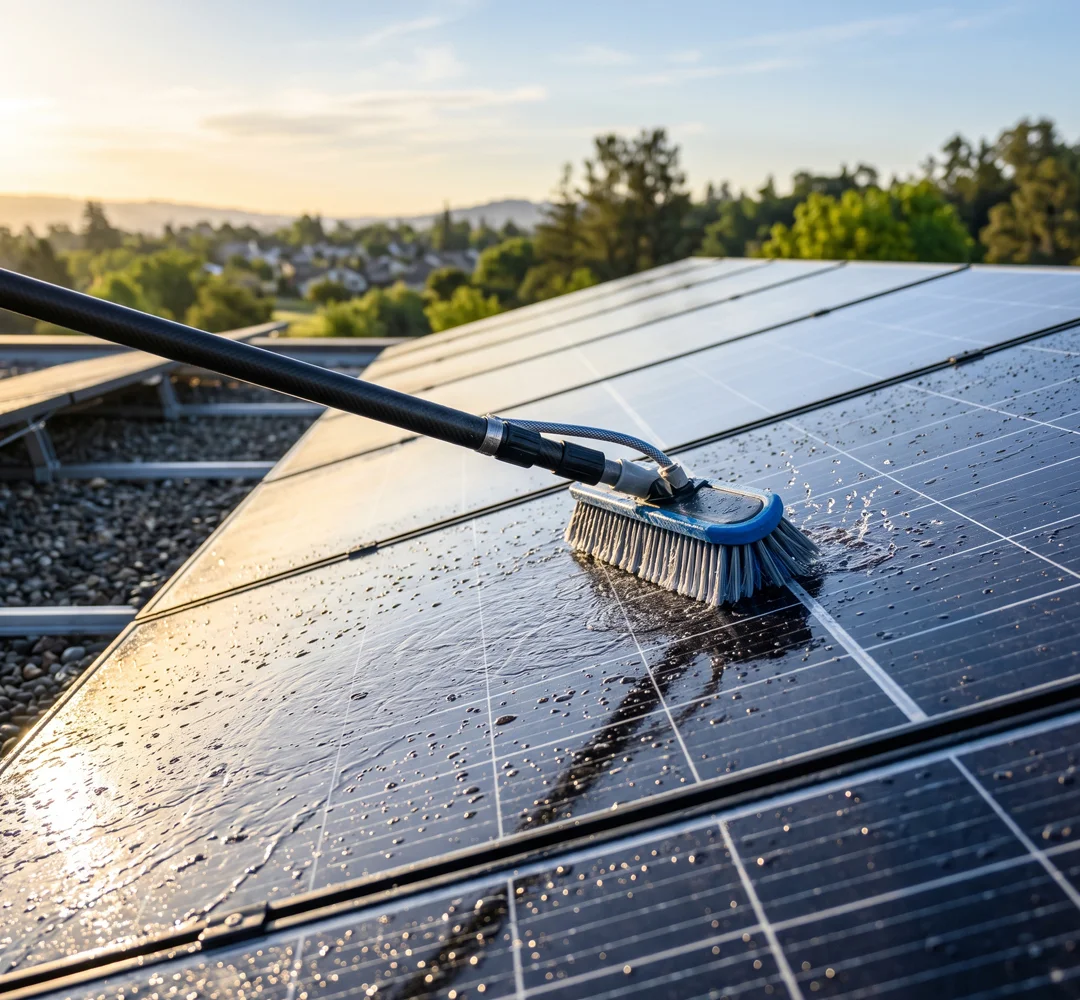
A Solar panel cleaning brush with a motor uses soft bristles specifically designed for panel glass. The motorized rotation provides consistent, gentle pressure across the full surface without the risk of uneven scrubbing damage.
Extension Poles
Extension poles allow cleaning from the ground or from a safe, stable position. They reduce the need to climb onto rooftops and extend your reach across large panel arrays efficiently. They are essential safety equipment for solar panel cleaning on rooftop installations.
Squeegees With Soft Rubber Blades
A squeegee with a soft rubber blade removes excess water after rinsing. This prevents drying spots from forming, especially in hard water areas. Squeegees reduce the streaking that makes solar panel cleaning less effective.
Solar panel cleaning services from Solcare use professional squeegees and purified water delivery systems that eliminate streaking entirely.
Step-by-Step Cleaning Process
Step 1: Choose the Right Time
Solar panels should be cleaned early in the morning or late evening. Cleaning during cool hours will help prevent thermal shock from cold water coming into contact with hot solar panels. Additionally, it will ensure that the cleaning solution doesn’t evaporate quickly, which could lead to streaks.
It should never be done during the hottest part of the day. This is particularly important in Pakistan, where temperatures reach up to 40 degrees Celsius.
Step 2: Turn Off the System
Shut down your solar system before the solar panel cleaning process. This is to ensure protection from electrical hazards and to prevent the system from getting damaged during the cleaning process.
Step 3: Remove Loose Debris First
Before cleaning the panels using water or any cleaning solutions, make sure to get rid of the loose debris on the panels. This includes leaves, twigs, dirt, etc., which might scratch the surfaces when brushed.
Step 4: Apply Water and Clean Gently
Wet the surface of the panels using purified water. Then apply your cleaner using a soft brush or a microfiber cloth. Start from the top and move downwards on the panels. This ensures that no dirty water drips back onto parts that have been washed.
In case of stubborn stains such as bird droppings, leave your solution on the surface for about a minute before scrubbing. Do not scrub too hard to avoid scratching the panels.
Step 5: Rinse and Dry
The panels should be rinsed using purified water. Excess water should be removed from the panels using a soft squeegee. The panels should be allowed to dry naturally.
How Often Should You Clean Solar Panels?
Solar panel cleaning should ideally be done every six months to make sure it operates efficiently. However, this may vary depending on environmental factors. People living in areas with low rainfall or near construction sites require more frequent cleaning.
In Pakistan’s environment, it is recommended to clean once a month. Karachi’s coastal salt air, pollution in Lahore, and pre-monsoon sandstorms in Punjab and Sindh cause dirt to accumulate more rapidly compared to temperate climates.
Understanding how often to clean solar panels in your specific location helps you build a maintenance schedule that protects your system without unnecessary over-cleaning. Solcare provides location-specific guidance as part of every maintenance consultation.
DIY vs Professional Cleaning
When DIY Works
Ground-mounted panels are much easier and safer to clean yourself. They are often installed at a convenient height, making them easy to access without a ladder or safety harness. Similarly, easily accessible roofs with low pitch make DIY cleaning relatively straightforward.
For safe solar panel cleaning, always use extension poles where possible. Always clean from a stable, safe position. Always use the chemical-free methods in this guide.
When to Call Solcare
Hiring a professional solar panel cleaner is the smarter choice when panels are on a high roof, steep roof, tile roof, or hard-to-reach location. Professional services are also better when there is a persistent drop in output that basic cleaning has not resolved.
Solcare’s solar washing service uses purified water delivery systems, professional soft-brush equipment, and trained technicians who follow safe, chemical-free protocols on every visit. The service covers both residential and commercial panel arrays of all sizes.
Our solar maintenance packages include regular scheduled cleaning visits, performance checks, and documentation that supports your manufacturer warranty compliance.
Cleaning for Different Environments in Pakistan
Environment | Primary Issue | Recommended Frequency | Special Consideration |
Karachi coastal | Salt deposits and humidity | Every 3 to 4 weeks | Rinse salt residue immediately after exposure |
Lahore urban | Smog, dust, and pollution | Every 3 to 4 weeks | Vinegar solution helps cut through the pollution film |
Inland agricultural | Heavy seasonal dust | Monthly minimum | Increase frequency pre- and post-dust season |
Post-monsoon | Algae and water staining | After every rainy season | Check for biological growth on frames |
Industrial areas | Soot and heavy particulate | Every 2 to 3 weeks | Professional cleaning recommended |
Conclusion
Solar panel cleaning done correctly is not complicated. It requires the right water, the right tools, and the discipline to avoid the chemicals that cause lasting damage. Every cleaning session done the right way protects your warranty, preserves your panel coatings, and ensures your system generates the output it was designed to produce across its full 25-year lifespan.
At Solcare, solar panel cleaning is what we are built for. Our chemical-free professional cleaning services, motorized brush equipment, and scheduled maintenance programs keep your panels performing at their best in every season and every environment across Pakistan. Get in touch today and find out how clean your panels really should be.
FAQs
Q1. Is chemical-free solar panel cleaning effective?
Chemical-free solar panel cleaning with purified water, soft brushes, and biodegradable solutions helps in cleaning away any form of contamination effectively. It is also helpful in protecting the coating and frame from damage that harsh chemicals can cause over time.
Q2. Can I use household cleaners on my solar panels?
No, the majority of household cleaning solutions have ammonia, bleach, or abrasive materials, which lead to damage to the coating of solar panels and corrosion of the aluminium frame. Only use purified water and cleaning agents made for solar panel cleaning.
Q3. How often should I clean my solar panels in Pakistan?
For most Pakistani cities, monthly solar panel cleaning is recommended. For coastal areas like Karachi and dusty regions, more frequent cleaning is needed.
Q4. Can I clean solar panels myself?
Yes, you can clean solar panels by yourself only if the panels are low-height or ground-mounted. For high-roof and large commercial solar systems, professional cleaning is safer and more efficient.
Q5. Does rain clean solar panels?
While rain can wash off loose dust, it cannot effectively clean any bird droppings, salt deposits, pollution film, or mineral staining that may be left behind. It is still necessary to manually clean solar panels in areas with frequent rainfall.